Gian Boender
Winning a new customer costs far more than getting an existing customer to buy again. Yet most online stores spend nearly all their time and budget on ads for new customers. A loyalty program turns that around: you reward customers who come back, so they buy from you more often and are less likely to switch to a competitor.
In this article you'll learn what a loyalty program is, which types there are, what you can learn from well-known examples and how to set one up for your online store, step by step.
What is a loyalty program?
A loyalty program is a set way of rewarding customers for continuing to buy from you. That can be with points, discounts, free shipping, gifts or perks only members get. The goal is always the same: give customers a reason to order from you next time, rather than from the store with the lowest price.
A good program gives you three things:
- More repeat purchases. Customers who collect points or are members have a reason to come back.
- A higher customer value. People who buy more often are worth more over the whole relationship. Read more in what is customer lifetime value (CLV).
- More data and contact. Members leave their email address or phone number and often agree to receive messages, so you can reach them later.
6 types of loyalty programs
1. Points program
The classic: customers earn points per euro or per order and exchange them for a discount or a gift. Easy to explain, but only effective if points pay off quickly. If a customer has to save for a year to get five euros off, they'll forget about it.
2. Tiers
Customers move up a level as they buy more, for example bronze, silver and gold. The higher the tier, the better the perks: a bigger discount, free shipping, early access to sales. Tiers work well because customers don't want to lose their status.
3. Paid membership
Customers pay a fixed yearly fee and get perks in return, such as free shipping with no minimum order or extra discounts. Because they've already paid, they want to get the most out of it, which leads to more orders. This works best for stores where customers order often.
4. Cashback or store credit
After a purchase, the customer gets part of the amount back as credit for a next order. That's more concrete than points: everyone understands "€5 credit" straight away.
5. Referral program
Customers get a reward for bringing in a friend, and that friend often gets a discount too. Your most loyal customers recruit new ones for you.
6. Value-based or community program
No discounts, but involvement: a private group for regular customers, early access to new collections, workshops, or a donation to a good cause per order. This suits brands with a strong identity.
Well-known examples and what you can learn from them
| Program | Type | What you can learn |
|---|---|---|
| Albert Heijn Bonus Card (NL) | Free card with personal offers | Personal offers based on what someone buys feel more relevant than general discounts. |
| IKEA Family | Free membership with member perks | Free sign-up lowers the barrier, and you build a large base of customers you may contact. |
| bol Select (NL/BE) | Paid membership | Free, fast delivery makes customers choose the same store whenever they're in doubt. |
| Douglas Beauty Card | Free card with perks and extras | Small extras, such as samples and member offers, keep the program alive between purchases. |
The pattern: the best programs are easy to understand, pay off quickly and let the store stay in touch with the customer.
How to set up a loyalty program for your online store
Step 1: decide on your goal
Do you want customers to order more often, spend more per order, or churn less? For ordering more often, a points program or membership fits. For a higher order value, tiers fit. For customers drifting away, a personal offer after a few quiet months fits.
Step 2: choose a reward that fits your margin
Work out what a reward costs you. A common rule of thumb is a reward of a few percent of the order value, but above all look at your own margin and how often your customers return. Free shipping or a small gift often feels more valuable to the customer than it costs you.
Step 3: choose your tool
For the points and tiers themselves, you'll usually use an app that fits your store platform:
- WooCommerce: the official WooCommerce Points and Rewards extension, or third-party plugins.
- Shopify: apps such as Smile.io, LoyaltyLion or Rivo.
Start small. A simple program that works beats a complex system nobody understands.
Step 4: make it visible
A program nobody knows about achieves nothing. Show it:
- on your product pages and in the cart ("You'll earn 45 points with this order");
- in your order confirmation and shipping email;
- on the customer account page, with the points balance or tier;
- in your customer service conversations: mention the program when a customer is happy.
Step 5: stay in touch with your regular customers
This is the biggest difference between a program that works and one that fades away. Customers forget their points if you never remind them. A few moments that work well:
- Welcome message as soon as someone joins, explaining how it works.
- Reminder when someone is close to a reward or when points are about to expire.
- Exclusive offer for regular customers, for example early access to the sale.
- Post-purchase message with a thank-you and a tip or recommendation. For ideas, see upselling techniques.
Step 6: measure and adjust
Track how many customers join, how much more often members order than non-members, and how many rewards are redeemed. Ask members now and then what they think of it, too. How to do that is explained in how to measure customer satisfaction.
Reaching regular customers via WhatsApp and email
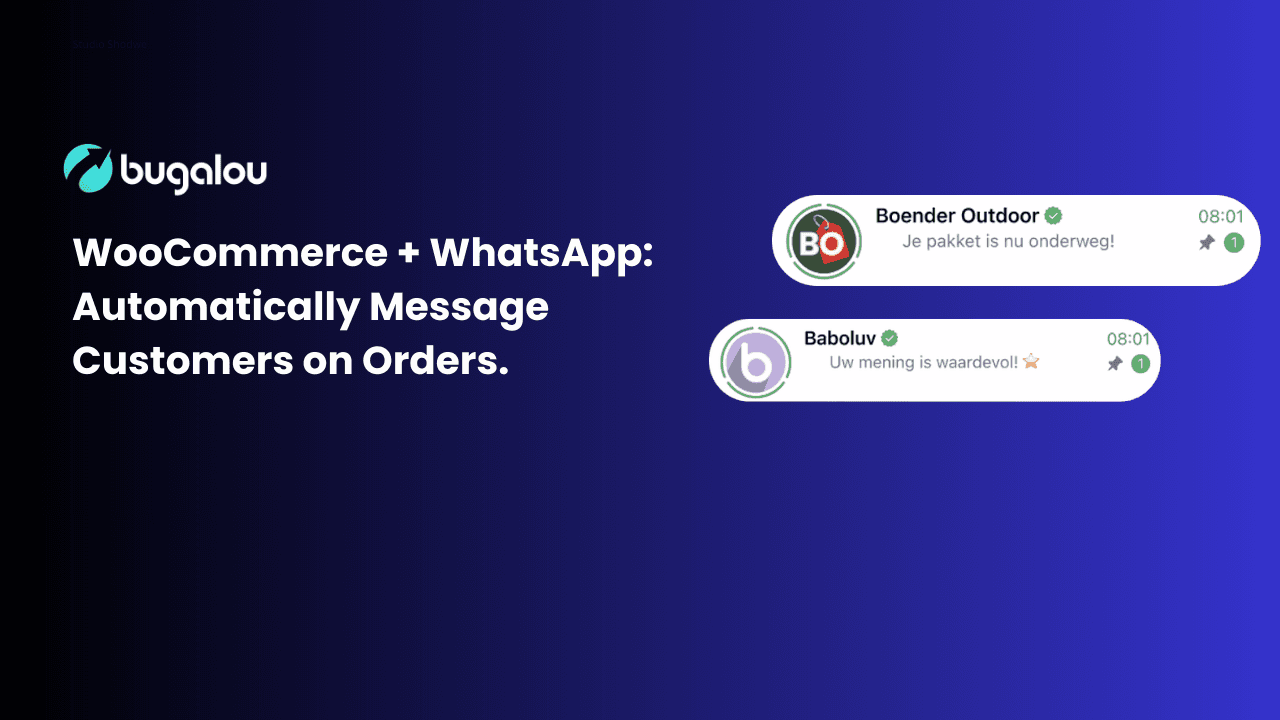
Email is the best-known channel for loyalty messages, but store emails often get lost among the promotions. A WhatsApp message is usually read much faster. That's why more and more stores use WhatsApp for their regular customers, provided those customers have opted in.
With Bugalou you do it like this:
- Recognise regular customers. Give contacts a tag, such as vip, or put them in the lifecycle stage Loyal customer.
- A broadcast to just that group. Send a WhatsApp broadcast or SMS to only your regular customers, for example for early access to the sale. Only contacts who have opted in receive it. For example messages, see WhatsApp broadcast messages: examples and templates.
- Automatically after an order. With an automation, you automatically send a thank-you via WhatsApp or email after a completed WooCommerce or Shopify order.
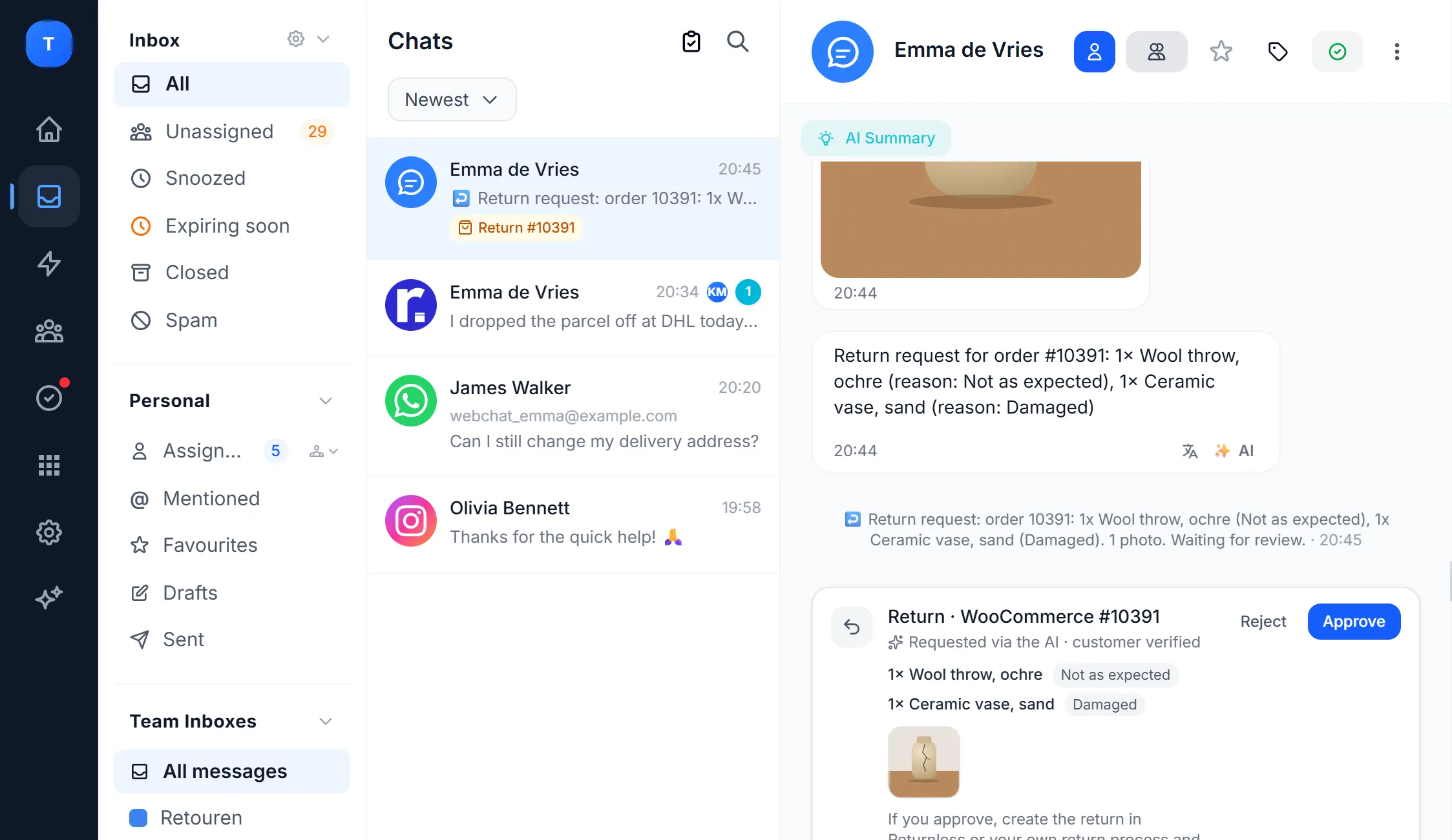
- Personal service. When a regular customer asks a question, the inbox shows straight away who it is and what they ordered before, so they feel recognised as a customer.
Broadcasts are included in Bugalou Pro and Enterprise. Bugalou has no points system of its own: you use a loyalty app for that, and Bugalou takes care of the contact with your customers.
Common mistakes
- Too complicated. If customers can't grasp what they get in one sentence, they won't join.
- Rewards that are too far away. The first reward should be reachable within a few orders.
- Only discounts. Discounts attract bargain hunters. Combine them with perks that aren't about price, such as free shipping, early access or personal service.
- No contact. Without reminders, customers forget the program.
- Not asking for consent. You need consent for marketing messages by email or WhatsApp. Ask for it when people sign up, and make unsubscribing easy.
- Poor service. A loyalty program doesn't make up for a bad experience. Customers mainly come back when they're helped quickly and well, including with a return.
Frequently asked questions
What's the difference between a loyalty program and a loyalty card?
A loyalty card is one form of loyalty program: a physical or digital card you use to collect points or get discounts. A loyalty program is broader and can also be tiers, a membership or a referral program.
Does a loyalty program make sense for a small online store?
Yes, especially. Small stores can't always compete on price, but they can compete on personal attention. Start simple, for example with a fixed discount or free shipping from the third order, and a personal message to your best customers.
What does a loyalty program cost?
The costs are the rewards themselves and possibly an app. Most loyalty apps for WooCommerce and Shopify have a free or low-cost starter plan. Above all, work out what your rewards cost you per order.
How do you measure whether a loyalty program works?
Compare members with non-members: how often do they order, how much do they spend per order and how many are still buying after a year? If you see no difference, adjust the reward or the communication.
Can I contact members via WhatsApp?
Only if they've given consent. Ask for it when they join the program, for example, or let customers sign up with a link or QR code. Read more in the WhatsApp newsletter guide.
Want to reach your regular customers personally via WhatsApp, email and your website, from one inbox? Try Bugalou free for 14 days.